Beyond the Auction: Reclaiming Lost Revenue in the Self-Storage Market
Serving some of the biggest Self-Storage companies in the nation. References Available.

In the self-storage industry, a common myth prevails: “If they don’t pay, I’ll just auction the unit.” While the “self-help” remedy of a lien sale is a powerful tool for reclaiming physical space, it is rarely a winning financial strategy. With rising operational costs and shifting market dynamics, storage operators cannot afford to settle for pennies on the dollar at auction.
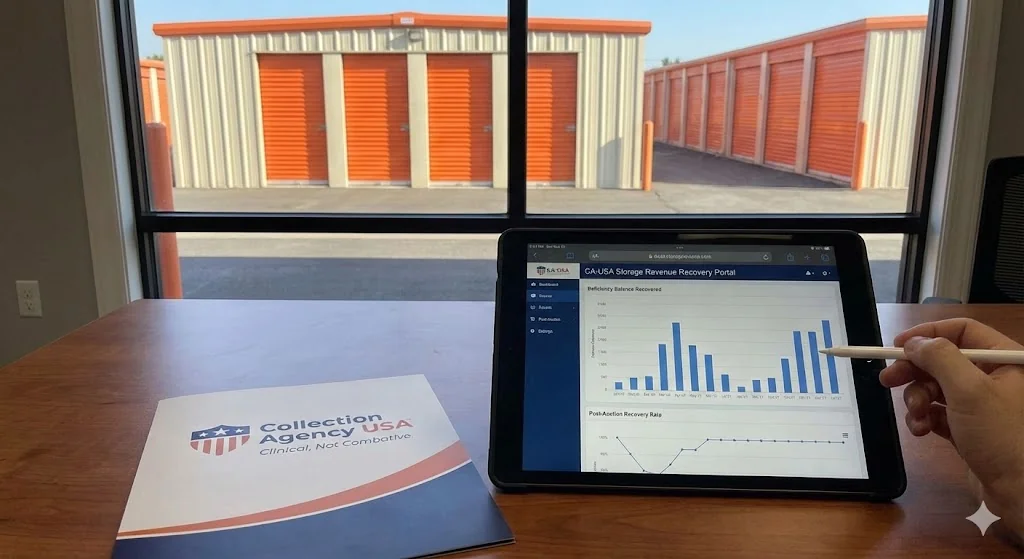
Collection Agency USA (CA-USA) provides a nationwide, clinical-first approach to debt recovery that bridges the gap between a vacated unit and a balanced ledger. We help you recover the deficiency balance—the money still owed after the auction—while acting as a shield for your facility’s professional reputation.
Protecting your reputation, CA-USA performs collections in all 50 states, ensuring a safe approach during every interaction. We provide free litigation screening and bankruptcy scrubs with zero onboarding or annual fees. Our SOC 2 Type II compliant systems ensure total data security, backed by a 4.85/5 rating from over 2,000 professional reviews. Delivering high recovery rates!
Need a Collection Agency? Contact us
Performance-Based Recovery
CA-USA gives two clean lanes:
-
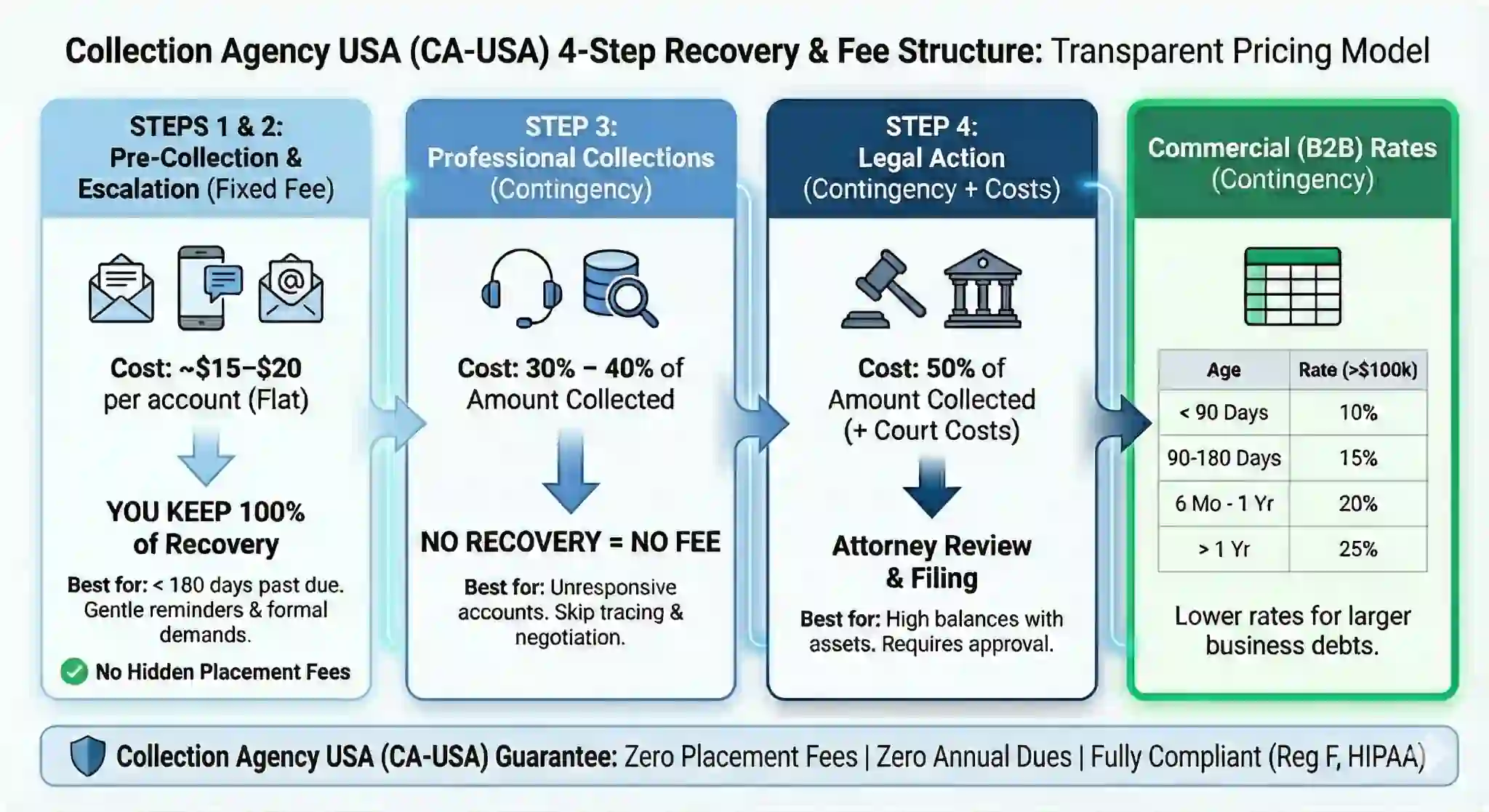
Fixed-Fee: $15 per account (you keep 100% of what’s recovered)
-
Contingency: 40% (no recovery, no fee)
Why Self-Storage Leaders Choose CA-USA
1. “Clinical, Not Combative” Reputation Protection
Storage defaults are often driven by “life happening”—relocations, family transitions, or financial shifts. Aggressive collection tactics from “old school” agencies often result in “review-bombing” and public complaints on Google or Yelp. Our approach focuses on Clinical De-escalation:
-
Neutral Third-Party Status: We lower the “temperature” by removing the personal friction between the tenant and your facility manager.
-
Professional Tone: Our communications are firm but respectful, preserving your brand’s 5-star standing in the community.
-
Recorded Compliance: Every call is recorded and reviewed to ensure 100% adherence to professional standards.
2. Advanced Credit Reporting & Skip Tracing
A “Midnight Move-out” is the bane of the storage industry. CA-USA uses elite skip-tracing databases to locate tenants who have vanished without a forwarding address.
-
The “Credit-Pressure”: We inform tenants that a storage default is a contractual debt. By reporting delinquent accounts to major credit bureaus, we provide a powerful incentive for them to settle the balance before it impacts their ability to rent their next home or secure an auto loan.
3. Solving the Labor Squeeze
Facility managers are increasingly stretched thin. Asking a manager to double as a debt collector is a recipe for burnout and poor customer service. Our automated, clinical outreach handles the heavy lifting, allowing your team to focus on leasing units and facility maintenance.
Recent Recovery Results
-
Multi-State Portfolio (Midwest):
A storage group with 15 locations was seeing a 40% loss on “deficiency balances” post-auction. Within 90 days of implementing CA-USA’s Fixed-Fee model, they recovered $42,000 in previous “dead-end” accounts without a single negative public review. -
Independent Facility (Texas):
After a tenant abandoned a large commercial unit, the auction left a $3,500 shortfall. Using advanced skip-tracing, CA-USA located the tenant’s new place of business and negotiated a full settlement within 30 days.
State-Specific Self-Storage Lien Compliance & Legal Authority
Recovering post-auction deficiency balances requires strict adherence to state-specific Self-Storage Facility Lien Acts. A facility’s legal right to collect unpaid balances hinges on whether the initial lien sale met statutory notice periods, verified delivery rules (certified mail or verified electronic delivery), advertisement windows, and commercially reasonable auction standards:
-
California: Operations must satisfy the California Self-Service Storage Facility Act (Cal. Bus. & Prof. Code § 21700 et seq.), including 14-day preliminary lien notices and formal notice of lien sale prior to public auction.
-
Texas: Governed by Texas Property Code Chapter 59, requiring verified notice of claim, strict payment cure windows, and compliant public advertisement before auctioning property.
-
Florida: Enforced under the Florida Self-Storage Facility Act (Fla. Stat. § 83.801–83.809), mandating written notice via verified mail/email and proper publication before pursuing remaining deficiency balances.
-
Nationwide (All 50 States): Once the statutory lien sale is properly executed and auction proceeds are applied to the ledger, the remaining unpaid rent, late fees, and processing costs constitute a valid, legally enforceable contractual debt. CA-USA audits each file to verify that statutory lien protocols were satisfied before initiating collection and credit bureau reporting.
Our Strategic Recovery Suite
| Service | Strategic Application | Financial Benefit |
| $15 Fixed-Fee | Early-stage delinquency (30–60 days). | Keep 100% of the recovered funds; often tax-deductible. |
| Contingency (40%) | Post-auction or “Midnight Move-outs.” | No recovery, no fee. Includes high-intensity skip tracing. |
| Credit Reporting | Unresponsive debtors. | High-impact leverage to motivate payment. |
| Litigation Scrubs | High-balance units. | Identify “judgment proof” tenants before incurring legal costs. |
Frequently Asked Questions
If a storage unit is auctioned for less than the tenant owes, what happens to the remaining balance?
An auction does not necessarily wipe out the entire debt. If the sale proceeds are less than the valid rent, fees, and other charges owed, a deficiency balance may remain. Whether that balance can be pursued depends on the rental agreement and applicable state law. Storage operators should apply the auction proceeds correctly and maintain a clear final ledger before referring any remaining balance for collection.
Should a self-storage account be sent to collections before or after the lien auction?
It can depend on the account and the facility’s collection process. Early collection efforts may help resolve a delinquency before an auction becomes necessary, while post-auction collections can focus specifically on any remaining deficiency. Operators should make sure collection activity does not conflict with required lien notices, auction procedures, or state-specific timelines.
What documents make a self-storage debt easier to collect?
Strong documentation can make a major difference when a former tenant disputes the balance. Useful records include the signed rental agreement, complete account ledger, payment history, delinquency notices, tenant communications, lien or auction records, auction proceeds, and an itemized calculation of the final amount owed. The cleaner the documentation, the easier it is to explain and substantiate the debt.
Can a tenant still owe money after abandoning or emptying a storage unit?
Potentially, yes. Simply removing the contents or abandoning the unit does not automatically cancel amounts already owed under the rental agreement. The final balance may include unpaid rent and other properly authorized charges through the applicable termination date. Any deposits, credits, recovered funds, or other adjustments should be applied before the account is referred for collection.
Can late fees, clean-out charges, and auction expenses be included in a collection balance?
Only charges that are properly authorized should be included. Storage operators should review the rental agreement and applicable state law before adding late fees, lien-sale expenses, clean-out costs, administrative charges, or similar items to the amount sent for collection. An itemized balance is generally much easier to support than a single unexplained total.
What if the storage unit was rented by a business instead of an individual?
Business storage accounts can require a different collection approach. The rental agreement should identify the legal business responsible for the unit and whether an owner or another individual provided a personal guarantee. Before placing the account, operators should verify the business name, billing records, contract, guarantor information, and final balance so collection efforts are directed toward the correct responsible party.
Hire a Collection Agency? Contact us